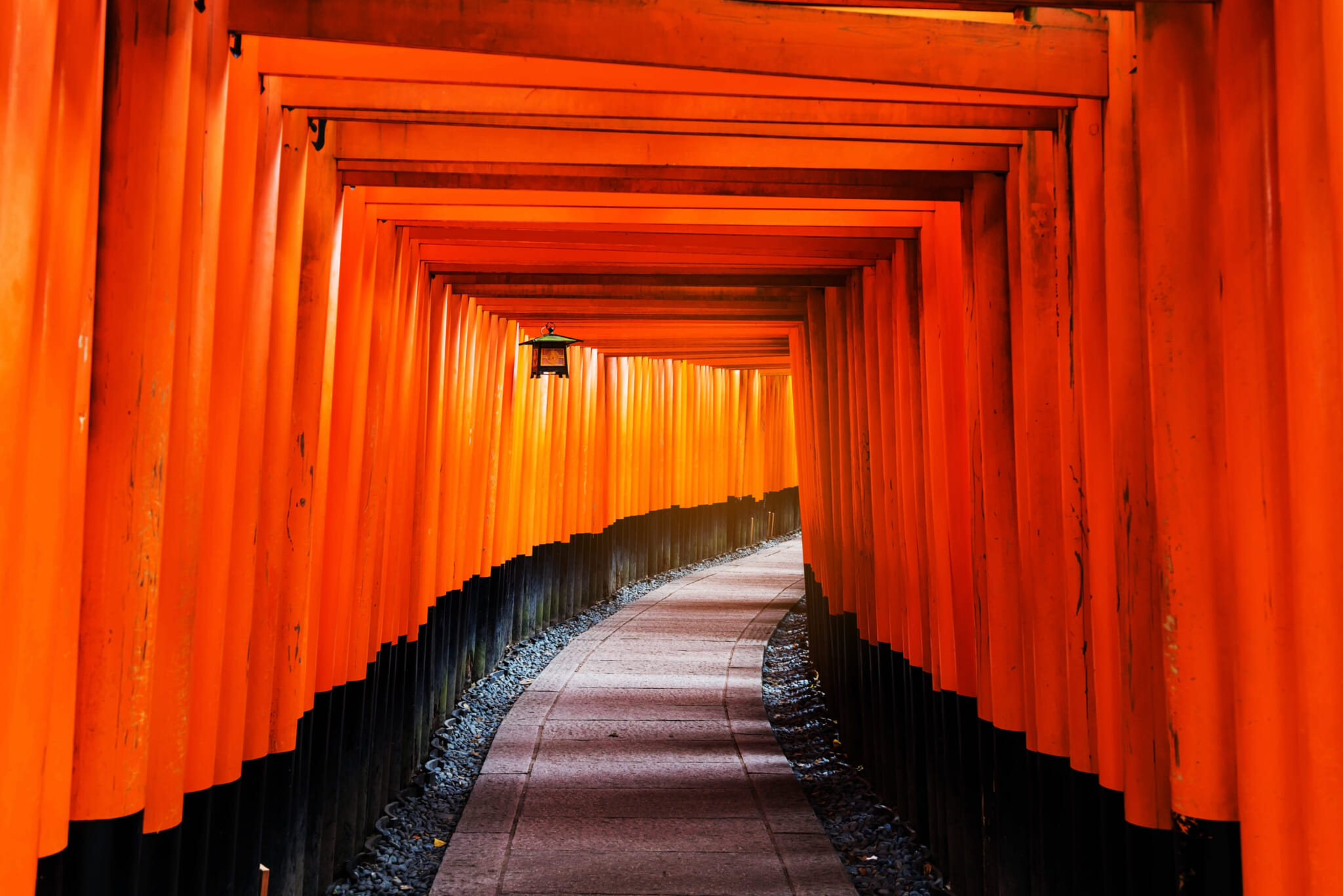
Rising majestically on the slopes of Mount Inari in southern Kyoto, Fushimi Inari Shrine stands as one of Japan’s most breathtaking spiritual sites. Famous for its seemingly endless tunnels of vermillion torii gates winding up the mountainside, this ancient shrine has become one of the most photographed locations in all of Japan and an essential stop for anyone exploring things to do in Kyoto.
Highlights
- 10,000 Torii gates
- Head Inari shrine in Japan
- Hike up Mt. Inari at one of Japan’s most spiritual ssites
A Legacy of Faith and Fortune
Fushimi Inari Shrine boasts over 1,300 years of history, having been established in 711 CE. As the head shrine of approximately 30,000 Inari shrines scattered across Japan, it holds immense spiritual significance. The shrine is dedicated to Inari, the Shinto deity of rice, agriculture and prosperity. This explains the thousands of torii gates lining the trails—each one donated by individuals and businesses seeking blessings for success and good fortune.
Throughout the grounds, you’ll encounter numerous fox statues serving as messengers of Inari. These kitsune guardians often hold symbolic items in their mouths, from keys representing rice granaries to sacred jewels symbolizing prosperity.
The Fushimi Inari Hike Experience
What sets Fushimi Inari apart from other Kyoto shrines is the extraordinary hiking experience it offers. The main path features approximately 10,000 torii gates creating mesmerizing vermillion tunnels that snake their way up the 233-meter mountain. The full circuit to the summit and back takes roughly 2-3 hours, though you can turn around at any point.
The lower shrine complex, accessible immediately upon arrival, features ornate temple buildings, purification fountains and smaller shrines. As you ascend through the torii gates, you’ll discover various sub-shrines, rest stations and viewing platforms offering stunning vistas over Kyoto city. The gates gradually become smaller and more weathered as you climb higher, creating an increasingly intimate atmosphere.
Don’t miss the Senbon Torii section near the base, where the gates stand so close together they create a completely enclosed tunnel—the shrine’s most iconic and photographed spot.
When to Visit Fushimi Inari Shrine
One of Fushimi Inari’s greatest advantages is its 24-hour accessibility and free admission. However, timing your visit can dramatically affect your experience.
Best times: Early morning (before 8 a.m.) or late afternoon (after 5 p.m.) offer the most peaceful experience with fewer crowds and magical lighting filtering through the torii gates. The shrine is particularly atmospheric at dawn when mist often clings to the mountainside.
Seasonal considerations: Spring brings cherry blossoms to the lower grounds, while autumn paints the surrounding forest in brilliant colors. Summer can be hot and humid on the exposed trail, so bring water. Winter offers crisp, clear days with fewer visitors.
Avoiding crowds: Weekends and midday hours (10 a.m.-3 p.m.) see the heaviest foot traffic. If visiting during peak times, consider hiking beyond the first major intersection—most tourists turn back there, leaving the upper trails relatively quiet.
Getting There
Fushimi Inari Shrine is easily accessible via the JR Nara Line (5 minutes from Kyoto Station to Inari Station) or the Keihan Main Line (Fushimi-Inari Station). The shrine entrance sits just steps from both stations, making it one of the most convenient attractions in Kyoto.
Whether you spend 30 minutes photographing the lower torii gates or dedicate several hours to reaching the summit, Fushimi Inari Shrine offers an unforgettable journey through Japan’s spiritual heritage.